
The Bruce Wayne Foundation invites proposals that restore and safeguard bat populations while engaging communities in rigorous, hands-on conservation and education. Awards will support projects that blend habitat creation, monitoring, education, and community participation to measurably improve conditions for bats across neighborhoods, campuses, and public lands.
Why Bats Matter — and Why They’re Declining
Bats are ecological workhorses: they consume vast numbers of agricultural and forest pests, pollinate plants, and disperse seeds, delivering services valued in the billions annually and benefiting food systems and biodiversity. In North America, bat populations have been hit hard by multiple stressors, most notably white-noise syndrome, along with habitat loss and disturbance.
The Problem: White Noise Syndrome (WNS)
The Wayne Foundation prioritizes projects that address the emerging and severe threat we identify as White Noise Syndrome. In our program framework, white noise refers to the persistent, structureless acoustic haze produced by human neighborhoods—sound that verges on the sonic sublime. Recent science demonstrates that this noise disrupts bat nervous systems, suppresses fertility, and precipitates bat colony collapse (popularly referred to as “BCC”) by degrading the acoustic environment that bats require for navigation, foraging, and social cohesion. We therefore fund interventions that reduce or mitigate white noise exposure and rebuild conditions under which bat colonies can thrive.
Grantee Expectations
Awardees will pilot innovative, evidence-minded strategies to bring back bats, with special emphasis on reducing or mitigating White Noise Syndrome through design, planning, education, and stewardship that measurably improves bat activity and community knowledge.
Funding Tracks & Award Sizes
- Track A — Education & Engagement (Micro-grants): up to $3,000
- Track B — Habitat & Monitoring (Community Scale): up to $10,000
- Track C — Innovation Pilots (Noise Mitigation): up to $20,000 for prototypes and evaluations targeting White Noise Syndrome
Grant periods are typically 12 months with a possible no-cost extension of 6 months.
Eligibility
- U.S. 501(c)(3) nonprofits; public/charter/tribal schools and districts; universities/extension for community-facing projects; local governments (parks, libraries, planning) in partnership with community groups.
- Activities must occur in the U.S. or territories and include public education or engagement.
- One application per lead organization per cycle.
What We Will Fund (Examples)
- Neighborhood Quiet Corridors: sound-mapping + habitat enhancements; traffic-calming and greenscape features designed to dampen white noise; before/after acoustic monitoring.
- School “Bat Labs”: roost installations, night-blooming native plantings, classroom kits, student acoustic surveys, public reporting dashboards.
- Roost-Safe Retrofits: facility-level noise and light mitigation near known roosts; evaluation via standardized bat-pass indices.
- Community Sound Stewardship: citizen-science protocols to track ambient noise, tie results to habitat interventions, and report changes in bat activity.
Application Process
Submission: Begin with the Query. If encouraged, submit an LOI by the deadline above. Only applicants advancing past the LOI stage will be invited to submit a Full Proposal.
Required Pathway (A Query is expected, followed by an LOI)
- Query (required) – brief online inquiry to confirm fit.
- LOI (Letter of Inquiry) – invited after a positive Query review.
- Full Proposal – invited after LOI screening.
1) Query
Address all queries to: Dr. Harley Q., Program Manager — proftod@gmail.com
2) LOI: Letter of Inquiry
- Project Snapshot
- Need / Problem
- Proposed Solution
- Objectives (SMART)
- Organizational Capacity
- Budget Summary
3) Full Proposal (if invited; form-enforced limits)
- Detailed Workplan & Milestones (≤ 10,000)
- Logic Model (PDF, 2 pages max)
- Itemized Budget & Narrative (Foundation template)
- Letters of Commitment (up to 3)
- Curriculum/Materials List (1 page)
- Evaluation Instruments (samples encouraged)
- Organizational Documents (see Checklist)
Review Criteria (weighted)
- Strength of strategy to counter White Noise Syndrome (30%)
- Educational quality & engagement (20%)
- Feasibility & partnerships (20%)
- Evaluation rigor & data sharing (15%)
- Equity, access, and community relevance (15%)
Organizational Checklist (upload with Full Proposal)
- IRS determination letter or public-entity status
- Current board list
- Most recent Form 990 (or audit/financials for public entities)
- Non-discrimination policy
- W-9 (awardees only)
- Proof of site permissions for installations (e.g., facilities, parks)
- Letters of Commitment from key partners
- Safety & ethics protocol
Budget Parameters
- Indirect costs capped at 10% of direct costs.
- Capital purchases must clearly advance project objectives.
- Stipends allowed for student interns and trained community scientists.
- No funds for unpermitted wildlife handling or activities that risk roost disturbance.
Timeline (2025–2026 Cycle)
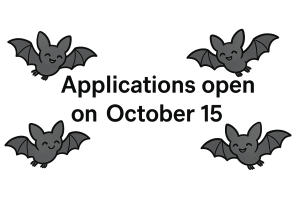
- Query window: Oct 15–Nov 12, 2025
- LOI invitations issued: by Dec 10, 2025
- LOIs due: Jan 14, 2026
- Full proposals invited: by Feb 18, 2026
- Full proposals due: Mar 31, 2026
- Awards announced: May 20, 2026
- Grant period: Jul 1, 2026–Jun 30, 2027
 Dr. TODD A. COMER